Category: Live Life Blog

  • Create a vision board

    Today’s lessons includes an activity – to create a vision board.

    Fifteen weeks ago, we completed an exercise to write down the biggest dream we desired. This was a hard task for some of us.

    First –to find the time and energy to sit down and write out the specific details describing the best life we can imagine.

    Second – the task may have been difficult if we did not have a system  which supported our belief that we could make our dreams come true. But we have since begun to develop a positive mind set and belief system.

    We identified 15+ aspects in our lives to include in our dream statement:
    – Life’s purpose, Passions, Personal accomplishments,
    – Family, Friend / relationships, Community, Fun, joy, hobbies,
    – Adventures, Experiences, Recreation, Health / Fitness,
    – Service, Career, Abundance, Financial plan, Other

    This week we will create a visual representation of our biggest dream imaginable.  A dream or vision board is simply a graphic detail of what we want to have, be and accomplish in life – our big dream.  If you choose you can internet search dream or vision board on life. There are many versions and samples available.

    Pull out your writer dream plan for reference – using any size, color or style of paper, card board or poster board – search through magazines, books, internet, photos, pictures, words and saying to include on your board.  Cut and paste.  Yes, it can be that simple.

    Here is the board I created last month.
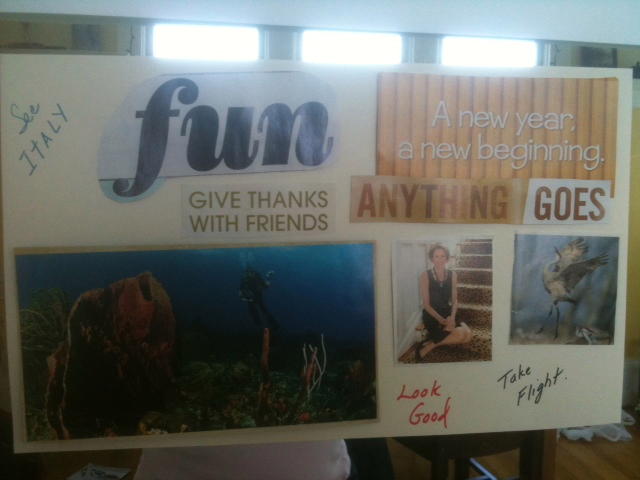
    vision board

    Display your board in a prominent place which you can look at on a regular basis.  As you look at it, keep a positive outlook and beliefs that you can make all of your visions come true.

  • Positive Thinking

    We are beginning the next chapter of the Kelly Coach blog and online coaching program – using positive thinking, affirmations,
    visualization to achieve our goals and dreams.

    Positive thinking is a mental attitude that looks at life on the bright side, seeing a glass as half full rather than empty. A positive mind anticipates that good things will happen with favorable results and successes.

    Positive thinking begins with self talk. Our mind is constantly processing our own thoughts as well as the deluge of media input we receive on a regular basis. Why is it harder to focus on the good ones rather than the bad?

    There are so many benefits from thinking positively:
    – Increased life span
    – Lower rate of depression
    – Better psychological and physical well-being
    – Fuller enjoyment of life
    – Ability to bounce back quicker from setbacks

    Let’s move forward to align our beliefs, thoughts and emotions so that we can attract more of what we want in life.

  • Power of Positive Thinking

    Yikes, today more than usual I have to embrace a positive attitude and take action.

    I am attempting to use my sister’s MAC to write this post. But as often happens with other people’s equipment, I can not even get safari to open.

    In the past, these situations would make me throw up my hands and walk away. But I have made a commitment to write a new blog post every Thursday in my coaching series so failure is not an option.

    So here I sit with my iPhone typing away. You see, I can not and will not miss this commitment.

    Today has been a true belief in positive thinking and taking action.

    “I can make this work.”

    Thanks for reading this unorthodox tale. Next week, I will resume the regularly scheduled program!

  • Lessons from Failures

    Our beliefs and past experiences have shaped who we are and what we do in the world.

    Some of beliefs are limiting or simply not true for us any longer. Yet we may still cling to them, acting on them, and hoping for a different outcome in the end.

    Our past experiences created results, which may not always be what we desired.

    In either case, we may have encountered failures from our beliefs and actions.

    Past failures are not an indication of what successes we can achieve now. Let’s look at our failures as learning experiences.

    We know there are lessons to be learned from failures and until we learn them we will continue to repeat the actions over and over again with the same result. Only when we get the lesson can we achieve a different outcome.

    We all have experiences we keep repeating in relationship, our spending habits, our health choices.

    Try this exercise to learn a new lesson from a failure:

    Step 1 – write down specifically what was your goal

    Step 2 – list the action steps you took to achieve the goal

    Step 3 – list the actions steps which were successful
    –what did you learn from them

    Step 4 – list the actions steps which were not successful

    Step 5 – list why these actions did not help you reach success

    Step 5 – brainstorm – write down several alternative actions you could try next time.

  • Taking personal responsibility

    We have beliefs, thoughts and emotions, which co-exist.  They are sometimes in alignment and sometimes in opposition.

    First we must take responsibility for all of them, regardless of how or when they were created.

    Every time we blame a problem or situation on someone or something else, we are giving up control of our life.  Yes, we all have a past. We have made the wrong decisions, taking the wrong path.  But the past is over and it should not a reason to deflect your responsibility in the present and future.

    Taking responsibility is about being in control and having faith and hope in your ability to succeed in whatever your dream is.

    When faced with any belief, thought, or emotion – step back, take a moment and ask…

    “Is it so?”

    By that I mean analyze whether these beliefs, thought, emotions are true on the reality now, based on all of our life experiences, and knowledge.

    It is okay to develop new beliefs.

    It is okay to change our thoughts, our minds.

    It is okay to feel our emotions and to let them lead us on our journey. We can trust our instincts.

    When we are clear on a belief, thought or emotion, we can use them to propel us into the appropriate action to achieve our goals
    and dreams.

  • Beliefs and our emotions

    I think of our beliefs, thoughts and emotions as a chicken and egg scenario. Now I’m sure there are scientific theories, which explain the relationship between them but I struggle with the concept.

    There is a connection between our beliefs, our thinking and our feelings, which can have the power to change our actions and behavior, to help us make our dreams come true.

    Beliefs – We have some beliefs which are very old – some are true,  others are false.  Some of these beliefs, direct our thoughts.

    Thoughts – Every day we are bombarded with so much stimuli. This constant input can affect our thinking. Over time, new information can become powerful enough to dispel older beliefs or to create new beliefs. Sometimes, however, our beliefs are so strong that regardless of new information learned we refuse to change them.

    Emotions – Our feelings or emotions are indications of how we are thinking and what we believe. For me, an emotion is a good barometer to determine if what I think and believe is true.

    “Beliefs can lead to feelings and feelings make thing happen.”

    We believe in ways we are supposed to feel and react to life:
    If we feel angry, we belief we are wronged
    If we feel sad, we believe we caused ourselves pain
    If we feel happy, we feel it will not last
    If we feel frustrated, we believe we can never accomplish our goal and so on…

    Be aware of your feelings. When you experience an emotion good or bad, take a moment and analyze your thoughts and beliefs you are attaching to the emotion to decide if they are all aligned to help you achieve your dreams.

  • Thoughts and our beliefs

    As we identify our goals and dreams, and we create our action plan, we must align our beliefs system to achieve success.

    “Your beliefs become your thoughts, your thoughts become words, your words become actions, your actions become habits, your habits become your values, your values become your destiny.”
    -Ghandi

    Our beliefs formulate how we think about ourselves and our lives. What we believe, we bring into our lives. We are what we believe and think.

    A belief is a thought that we make real or accept as fact. We must believe we deserve to have our dreams come true.

    We may be stuck with beliefs we developed at an early age, even ones  that are no longer  true for us. The wrong beliefs can limit our ability to reach for our biggest dreams.

    For instance, if you believe that are intelligent, you may believe you deserve a good job or career. If you believe you are not smart,
    you may believe that you can never advance in your chosen profession.

    Our beliefs are thoughts we keep thinking until they become our reality.

    So the next time you have a negative thought beginning with — I can’t, I shouldn’t, I couldn’t, I won’t, I wouldn’t, etc. — stop and replace the thought with a positive statement….

    Remember, “If we think we can, we can, if we think we can’t we can’t.”

  • Our self beliefs

    The topic for these next five blogs post is self-belief.

    We will look at our belief systems:
    -how they were created and developed over time
    – which beliefs are true, which beliefs are false
    – how are beliefs drive our thoughts
    – how they are connected with our feelings
    – how our beliefs direct our actions.

    According to the merriam–webster dictionary: A belief is a state of mind in which trust or confidence is placed in a person or thing.

    With a self belief the trust or confidence is placed within us.

    We must trust that our skills, abilities, knowledge, and confidence will enable us to decide on and live a lifestyle filled with joy and meaning.

    Wikipedia states: Belief is a psychological state in which an individual holds a proposition or premise to be true.

    Our beliefs system began developing as children. First, through our family structure, we had expectations and behaviors we were taught and were are expected to follow.

    So before we could even walk or talk our belief system was forming. Did we hear laughter, singing, praise, cooing, soft, sweet words or anger, disapproval and yelling at home?

    “We tend to internalize the beliefs of the people around us during childhood.”
    -Wikipedia

    We continued to develop our beliefs through the acceptance of what we observed and were told by experts, authorities, role models, movies, television, entertainers and athletes, parents, teachers, religious leaders and even politicians and of course, our education, our own life experiences.

    So we can see that our beliefs develop over a very long time period and can change as new information becomes available.  What we believed as children, young adults, parents, workers, partners may not be true for us any longer.

    This month, let’s take time to observe our beliefs. Are they based on our truth? Are they empowering to us live the life of our dreams?

  • Share your Joy

    Good job.  We are increasing our joy and happiness experiences.

    While the suggestion last week was to include 15 minutes of conscious, active FUN every day, even if you only succeeded two or three times – you just doubled or tripled your amount of FUN.

    As a reminder by conscious, I mean when doing you fun activity, you are mindful of your experience and your purpose to have FUN.

    Say to yourself – “This is fun.” (or a quote of your choosing.)

    The more fun we have, the better we  feel, the more energized we  become, the more inspired, the more active, the more satisfied.
    We can create a higher quality of life – the life we want and dream about. Because if our dreams do not bring us joy, happiness and FUN, it’s time to rethink them.

    What if this weekend you threw caution to the wind and took an entire morning or afternoon for FUN.  Skip the laundry, house cleaning, boring planned activity and do what you want to do – just for FUN.

    What is on your someday list?
    – an art project
    – see the wildflowers – hike
    – dance class
    – golf, tennis, badminton game
    – knit a scarf
    – take a yoga class
    – cook a gourmet meal
    – clean out the closet (I’m not kidding – there is a great relief
    – from tackling a project – enjoy the memories attached to
    – your things and then let them go!)
    – see a double bill at the movies
    – go wine or beer tasting
    – play a game
    – sit out in the sun with a good book…

    And to make it even better, take along a friend.

    Share you joy, set an example, lead the way. Go ahead – have some FUN.

  • 15 Minutes of Fun a Day

    We have spent this month experiencing more joy and happiness in our lives.

    This week’s exercise is about enjoying 15 minutes of FUN every day. A technique I learned from Shawn Achor, a Harvard positive psychology expert. (Look on youtube for Shawn’s videos.)

    The 15 minutes of fun has to be active. We have to be mindful about it – meaning to really enjoy what we are doing.  We can say to ourselves, I will have fun for the next 15 minutes. We simply can change the way we are thinking about our fun activity.

    The challenge is to consciously include time in your life every day to play, laugh, create, enjoy, spend time doing what you enjoy, to have fun.

    Sounds simple enough but it is surprising how hard it may be to purposely have fun.

    Some changes in your life require creating a new habit or breaking an old one. Some say it takes 28 days to create a habit, but my
    experience showed me that it takes much more – twice or three time the number of days.

    This week is a perfect opportunity to create a new habit. A habit which will bring you joy and happiness for many years to come.
    The practice of including focused joy in life.

    Consciously committing to a 15 minute fun activity can even help you start to become healthier.

    How is that possible you ask?  If we exercise we start feeling better, if we start feeling better we will want to eat healthier. When we change our eating habits, we will become healthier.

    When you use the fun 15 exercise, your brain says I’ve been successful in one domain, I bet I can be successful in another domain. I can try out another positive fun 15 minute habit.

    To get started create a list of things that bring you joy, make you laugh, you simply enjoy doing.

    Some possibilities: exercising for FUN…

    Working out for life
    Working out for life

    – take walk in a park
    – cook a new recipe or old favorite
    – pull out the sewing machine and create something
    – hit the golf links

    Golf outing
    Golf outing

    – sign up for a laugh a day type web site
    – see a movie
    – tart a hobby
    – laugh out loud

    Right now go to a your day timer, cell phone, appointment book:
    – schedule the fun time in your calendar
    – write down the activity you will enjoy