Category: Self

our Self – who we truly are, our spiritual side,
our essence.

Have you discovered your true purpose for your life?
What are you most passionate about? Are you learning
new things, growing, stretching your limits?

Are you proud of who you are? Are you making a difference?

  • Eliminating obstacles

    The process to overcome our fears, doubts and negative self- talk is not easy.  Many of these obstacles have built up over a long period of time.

    We identify with them. We believe they are who we are, who we will always be.

    If limiting beliefs, fears and doubts are standing in the way of achieving your goals and dreams, then what is there benefit,
    how are they serving you? If fears and beliefs are bringing us the life we desire, then we must make a change.

    Change takes strength, courage, consistent and regular action.

    Most important, however, is this fact – if you are not ready or able to change – change will not happen.

    When you are ready to change, begin by taking small steps to attain your goals and dreams.

    To start, pick one small obstacle to work on – either a fear, a doubt or a limiting belief. Focus your energy and attention on it.

    Use on of the options from the last three blogs to work on your issue.

    Picture how your life will be different without this obstacle. What thing can you accomplish, what activity can you try, what action can you take?

    Will you climb a mountain, change jobs, end a relationship, begin a new hobby, work on your health or financial picture?

    Keep working on your changing process. Don’t let small setbacks derail  your progress. Keep at it, keep fighting, keep trying.

    Once you have succeeded in overcoming one small roadblock, use the feelings of accomplishment to propel you onto your next hurdle.

    You can do it!

  • Changing bad habits

    One reason we are stuck with negative or limiting beliefs, doubts and fears is because they become engrained in who we are.

    They become habits. We have many beneficial habits in our lives, which make getting through each day happen effortlessly.

    However, some habits stand in the way of our achieving the dreams and success we want for ourselves in life.

    Some of these bad habits are hard to break because they become enjoyable and we want to keep them.  This is especially true
    about our relationships with food.

    We can close out eyes and vividly remember the smells, tastes, and textures of many foods that we are “addicted” to. Regardless of how many times we read about the harmful effects of these foods, We can not stop eating them!

    According to wikipedia, a bad habit is a negative behavior pattern. Behaviors are acquired and develop over time. Habits are actions we take over and over again. Habits become unconscious, automatic thoughts and actions we take when we encounter a situation, which are based on prior experiences. With bad habits, these actions may not give us a desired or different result from the past.

    Changing a bad habit is possible. We can learn what it takes and put new actions into practice in your daily life to change the
    engrained habits of a lifetime. We can even learn to change the nature programmed into your genes, but it will take determined
    actions, over and over again, to reprogram your mind and change yourself.

    Here are 7 ways to break a bad habit:

    -1- put it in writing – use your journal to write about a bad habit – include exactly what is the habit, what do you do before engaging in the habit, what benefits does the habit bring you (this is important because we usually experience something satisfying from the habit), and what is an alternative habit choice.

    -2- make it conscious – become aware of when we engage in the habit, such as picking at nails, watching TV, eating junk food, running late for an appointment, procrastinating, etc.

    So many habits are mindless, routine, we don’t THINK about doing them. We can focus on our choices and decide if they are giving us the results we desire.

    -3- choose an alternative behavior – decide what to do instead. By being prepared with healthy food alternatives, we are less likely to reach for an unhealthy one.

    -4- choose positive thoughts – use positive language to adopt change. Instead of saying – “I am not eating any junk food today”. State – “Today I will eat a piece of fruit for snack.” Then of course, do it!

    -5- have patience – changing a long standing bad habit is not easy and it will take time.  Take small steps on a regular basis.

    Use the phrase  “Just this one time” and choose the side small salad instead of the order the french fries (So often “just this one time” for fries is every time!).

    -6- engage an ally – identify a friend with a similar bad habit and work together to change.

    -7- Reward yourself – the Pavlov method can work. We can focus on what reward we will earn for sticking to our goal.

    Choose an appropriate one – when You choose to eat fruit every day for snack, do you want to sabotage your efforts with a big banana split at week’s end?

    In summary, bad habits, which have developed over time can be changed.  Take regular, consistent action to succeed.
  • Limiting beliefs and obstacles in the way

    We create a vision for life, we dream of all that we can have, be, do, say, inspire, empower ourselves and others to be the best
    that we can be.

    We set goals, make a plan.

    We create our vision board, we visualize about the activities, the feelings we have living our dreams, we write out and say our
    affirmations regularly.

    And yet, we struggle, we stumble, we fall, we are stopped dead in our tracks. Yes, it is hard enough to make any change in life even if it is to have something which we say we really, really want.

    We try to do better, to change but then life throws at us obstacles and challenges which we have faced in the past.

    This next 15 week series is a challenge to face what is standing in our way to achieving our dreams.

    Our fears
    Our doubts
    Our procrastinations
    Our negative thoughts
    Our negative beliefs
    Our hectic schedule
    Our old habits
    Our emotional baggage
    Our past failures
    Our messes
    Our negative friends, relatives and others
    Our disorganization
    Our time wasters
    Our physical limitations
    Our defeatist attitude
    Our inaccurate perceptions of our reality
    Our past bad choices
    Our endless lists
    etc., etc., etc…..

    WOW – even to me this list is overwhelming.  And the truth is that we may not be successful in making all of the changes we want and desire in just 15 weeks.

    But we must start somewhere and at sometime so why not now. As we proceed through this process of change, we focus on taking “small steps” each and every day.  To learn to reward ourselves for success and not punish ourselves for failures but to take the missteps and learn from the experience.

    Slowly, gradually, we will find the strength, the will power, the belief, the fortitude to stick to our plan to make all of our dreams come true.

    This blog is a perfect example for me.  My post is due today at  3PM, PST and here at 10AM I was wondering how to complete it and all of my other “Priorities” on today’s list.  So rather than fret and agonize and talk myself out of success in getting things done, I buckled down and one by one, I checked off 5 items, posted the blog early and I am out the door.

    I did it, you can too!  Join me on these next 15 weeks of thoughtful analyzation and deep conversation with self to conquer some limiting beliefs and obstacles standing in our way.

  • Gratitude and appreciation

    Our attitude is key to achieving our dreams. We discussed developing and maintaining a positive attitude, which can be easier said than done.  The important thing to remember is that when negative thoughts creep into our consciousness, we can acknowledge them and replace them with a positive statement – perhaps something from our affirmation list.

    Another tool for creating a positive attitude is to recognize gratitude and appreciation for all that we have right now.

    Happiness is itself a kind of gratitude.” Joseph Wood Krutch

    Life constantly presents us with obstacles and challenges but they are not more than we can handle and each one offers us a learning and growing opportunity.

    When we practice gratitude and appreciation we are focusing our thoughts and energy on all that is good and what is working for us in our life, we are attracting more of the same to us. We can choose to embrace the positive rather than the negative in life.

    Two popular techniques to practice gratitude and appreciation are:

    Journaling –  each and every day take a few minutes to write down a few, simple gratitude statements.  Reread them with enjoyment and pleasure that we are blessed in many ways.

    Carrying a touch stone – a touch stone is a small,  meaningful object you carry with you everyday. Each time to reach into your pocket or purse and “touch” your piece is a reminder to take a moment and be more present in the moment and feel grateful for your blessings.  The piece can also helps change a negative thought or situation by reminding you that even a negative situation you may be in will pass.

    To sum up this section of using our attitudes to achieve our dreams, keeping a positive outlook using these simple tools activates the Law of Attraction to help make our dreams come true:

    a vision board
    affirmations
    visualization
    gratitude journaling

  • Using our vision board

    The use of a vision board was popularized by the movie “The Secret” and it’s focus on the Law of Attraction.  This law had been used and kept secret for many years by some of the wealthiest people in the country.

    The movie educated more of us about the benefits of using a positive belief system to attract what we want in life.

    Since the movie aired, thousands of us, have experiences success in many areas of life – beyond the measure of financial wealth.

    Creating a vision board was the first step in achieving success. We stated  what we want for ourselves in life.

    Today I will share two powerful techniques to use with the vision board: Visualization and Affirmations.

    Practice one or both of these techniques daily to ensure success.

    Visualization

    “Visualizing is daydreaming with a purpose.” Bo Bennett

    Create your day in advance – take a moment in the morning with your calendar in front of you and visualize how everything that day will go according to your plan, the plan you established to make your dreams come true.

    With your vision board in hand, sit in a comfortable position, take a deep breath and relax.  Picture in your mind a goal on your board with all of the details, sights, and sounds that this vision encompasses. Picture your exact vision happening just the way you imagined.

    Who is with you? What are you feeling?
    What are you doing?
    What will you accomplish each day to make your dream come true?

    Affirmations

    “Every thought we think is creating our future.” Louis L. Hay

    Every thought or statement we make is an affirmation. Whether the thought is positive or negative, it affirms a belief to be true for you.

    The purpose of writing and using affirmations is to create of list of positive statements will reinforce and inspire you to achieve your dreams.

    A few guidelines to create you affirmations are:
    – Use positive language, stated in the present tense
    – Make them short and specific
    – Use action words
    – Make them personal

    Some of  my affirmations are:
    – I feel and look great.
    – I give my self permission to be powerful.
    – I attract all the right people to work with me in business.
    – I experience abundance and prosperity in my life.
    – I communicate often and openly.

    Begin with a few statements for yourself.  Choose one priority from your vision board and write down 5 or 6 statements about the goal.  Read them to your self every day.  How quickly can you memorize them and speak them from the heart?

  • Create a vision board

    Today’s lessons includes an activity – to create a vision board.

    Fifteen weeks ago, we completed an exercise to write down the biggest dream we desired. This was a hard task for some of us.

    First –to find the time and energy to sit down and write out the specific details describing the best life we can imagine.

    Second – the task may have been difficult if we did not have a system  which supported our belief that we could make our dreams come true. But we have since begun to develop a positive mind set and belief system.

    We identified 15+ aspects in our lives to include in our dream statement:
    – Life’s purpose, Passions, Personal accomplishments,
    – Family, Friend / relationships, Community, Fun, joy, hobbies,
    – Adventures, Experiences, Recreation, Health / Fitness,
    – Service, Career, Abundance, Financial plan, Other

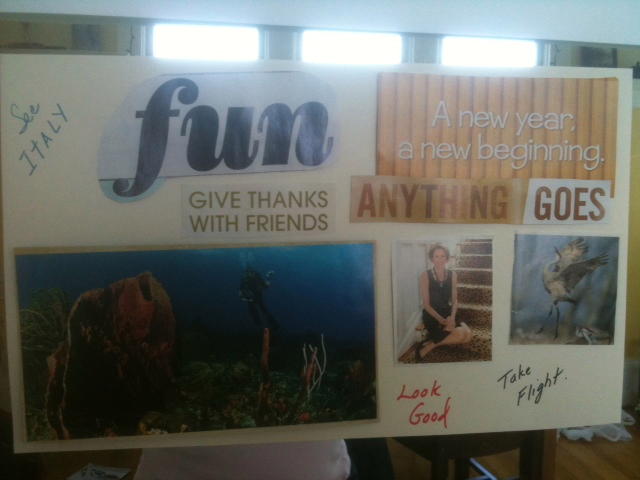
    This week we will create a visual representation of our biggest dream imaginable.  A dream or vision board is simply a graphic detail of what we want to have, be and accomplish in life – our big dream.  If you choose you can internet search dream or vision board on life. There are many versions and samples available.

    Pull out your writer dream plan for reference – using any size, color or style of paper, card board or poster board – search through magazines, books, internet, photos, pictures, words and saying to include on your board.  Cut and paste.  Yes, it can be that simple.

    Here is the board I created last month.

    vision board

    Display your board in a prominent place which you can look at on a regular basis.  As you look at it, keep a positive outlook and beliefs that you can make all of your visions come true.

  • Positive Thinking

    We are beginning the next chapter of the Kelly Coach blog and online coaching program – using positive thinking, affirmations,
    visualization to achieve our goals and dreams.

    Positive thinking is a mental attitude that looks at life on the bright side, seeing a glass as half full rather than empty. A positive mind anticipates that good things will happen with favorable results and successes.

    Positive thinking begins with self talk. Our mind is constantly processing our own thoughts as well as the deluge of media input we receive on a regular basis. Why is it harder to focus on the good ones rather than the bad?

    There are so many benefits from thinking positively:
    – Increased life span
    – Lower rate of depression
    – Better psychological and physical well-being
    – Fuller enjoyment of life
    – Ability to bounce back quicker from setbacks

    Let’s move forward to align our beliefs, thoughts and emotions so that we can attract more of what we want in life.

  • Power of Positive Thinking

    Yikes, today more than usual I have to embrace a positive attitude and take action.

    I am attempting to use my sister’s MAC to write this post. But as often happens with other people’s equipment, I can not even get safari to open.

    In the past, these situations would make me throw up my hands and walk away. But I have made a commitment to write a new blog post every Thursday in my coaching series so failure is not an option.

    So here I sit with my iPhone typing away. You see, I can not and will not miss this commitment.

    Today has been a true belief in positive thinking and taking action.

    “I can make this work.”

    Thanks for reading this unorthodox tale. Next week, I will resume the regularly scheduled program!

  • Lessons from Failures

    Our beliefs and past experiences have shaped who we are and what we do in the world.

    Some of beliefs are limiting or simply not true for us any longer. Yet we may still cling to them, acting on them, and hoping for a different outcome in the end.

    Our past experiences created results, which may not always be what we desired.

    In either case, we may have encountered failures from our beliefs and actions.

    Past failures are not an indication of what successes we can achieve now. Let’s look at our failures as learning experiences.

    We know there are lessons to be learned from failures and until we learn them we will continue to repeat the actions over and over again with the same result. Only when we get the lesson can we achieve a different outcome.

    We all have experiences we keep repeating in relationship, our spending habits, our health choices.

    Try this exercise to learn a new lesson from a failure:

    Step 1 – write down specifically what was your goal

    Step 2 – list the action steps you took to achieve the goal

    Step 3 – list the actions steps which were successful
    –what did you learn from them

    Step 4 – list the actions steps which were not successful

    Step 5 – list why these actions did not help you reach success

    Step 5 – brainstorm – write down several alternative actions you could try next time.

  • Beliefs and our emotions

    I think of our beliefs, thoughts and emotions as a chicken and egg scenario. Now I’m sure there are scientific theories, which explain the relationship between them but I struggle with the concept.

    There is a connection between our beliefs, our thinking and our feelings, which can have the power to change our actions and behavior, to help us make our dreams come true.

    Beliefs – We have some beliefs which are very old – some are true,  others are false.  Some of these beliefs, direct our thoughts.

    Thoughts – Every day we are bombarded with so much stimuli. This constant input can affect our thinking. Over time, new information can become powerful enough to dispel older beliefs or to create new beliefs. Sometimes, however, our beliefs are so strong that regardless of new information learned we refuse to change them.

    Emotions – Our feelings or emotions are indications of how we are thinking and what we believe. For me, an emotion is a good barometer to determine if what I think and believe is true.

    “Beliefs can lead to feelings and feelings make thing happen.”

    We believe in ways we are supposed to feel and react to life:
    If we feel angry, we belief we are wronged
    If we feel sad, we believe we caused ourselves pain
    If we feel happy, we feel it will not last
    If we feel frustrated, we believe we can never accomplish our goal and so on…

    Be aware of your feelings. When you experience an emotion good or bad, take a moment and analyze your thoughts and beliefs you are attaching to the emotion to decide if they are all aligned to help you achieve your dreams.